
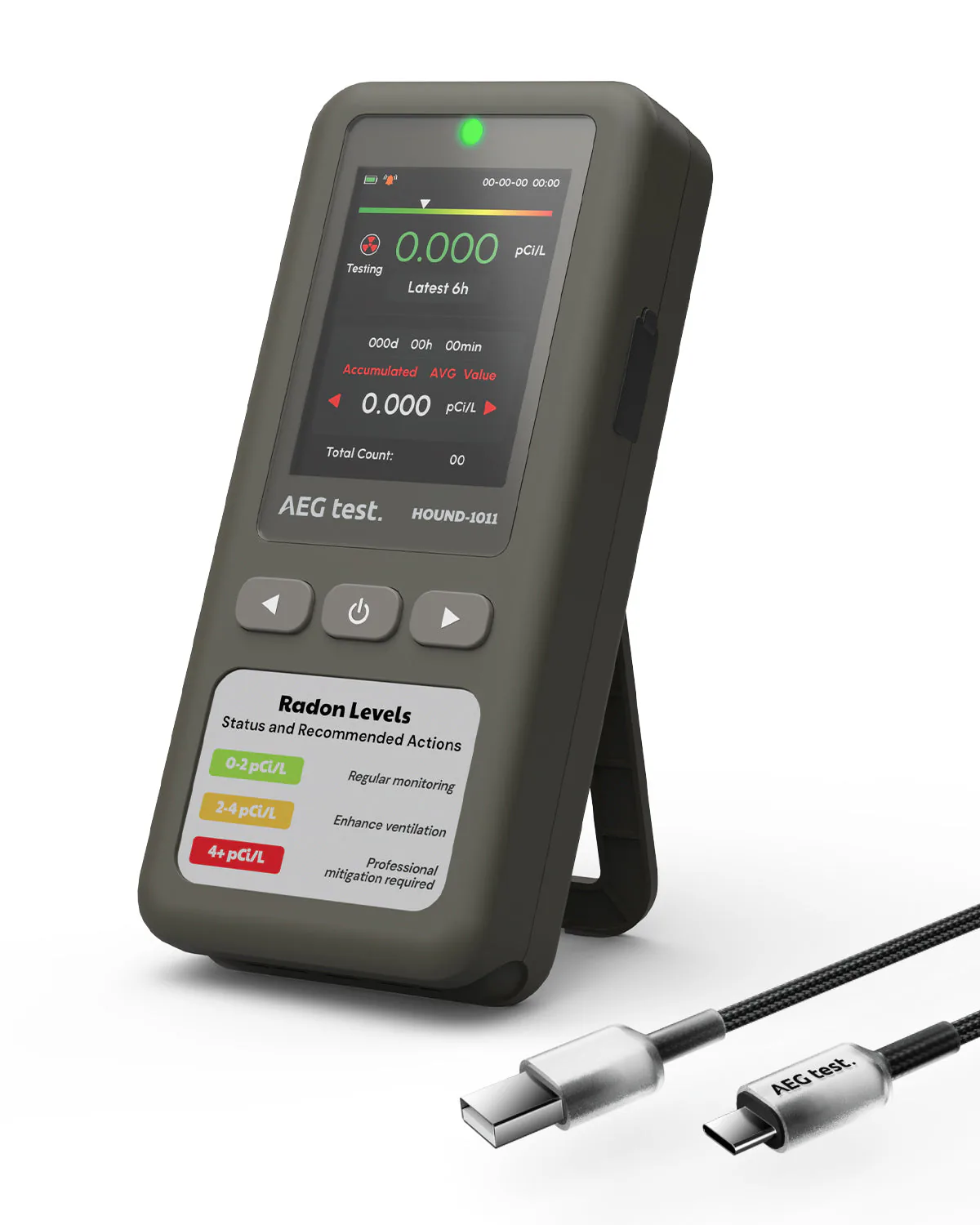
MonitorAEGTEST
HOUND-1011 rechargeable radon detector with a screen
- C-NRPP 2024/25: Not included
- Battery
- Alarm
- Screen
Method: Semiconductor sensor
First reading: Within 6 hours
Forensics Detectors
Rechargeable radon detector with a color screen
Best for you if
Skip it if
Photos: Forensics Detectors
 (opens in a new tab)Check price on Amazon (opens in a new tab)
As an Amazon Associate, Radon411 earns from qualifying purchases.
Amazon and the Amazon logo are trademarks of Amazon.com, Inc. or its affiliates.
See ratings and reviews on Amazon (opens in a new tab)As Forensics Detectors states it
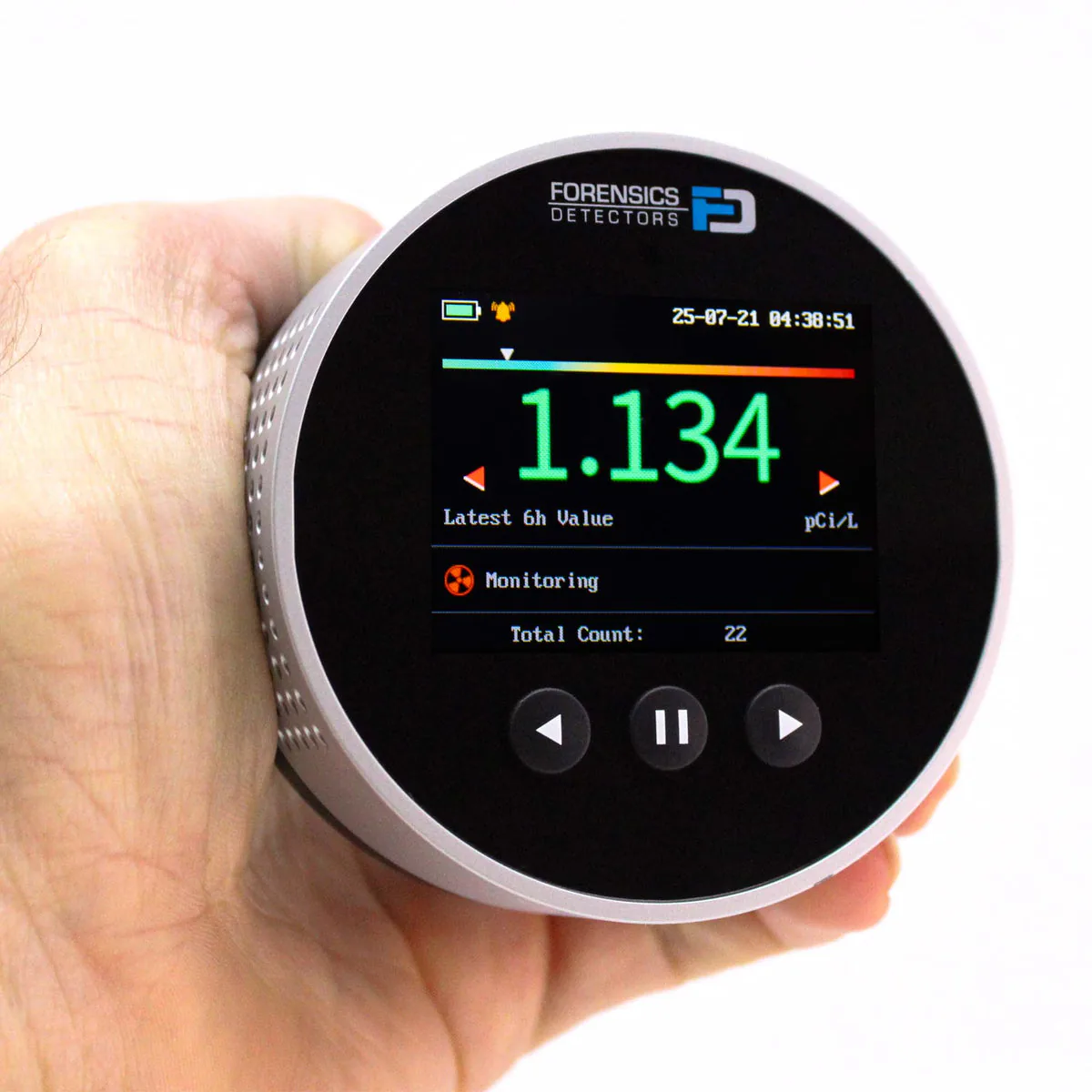
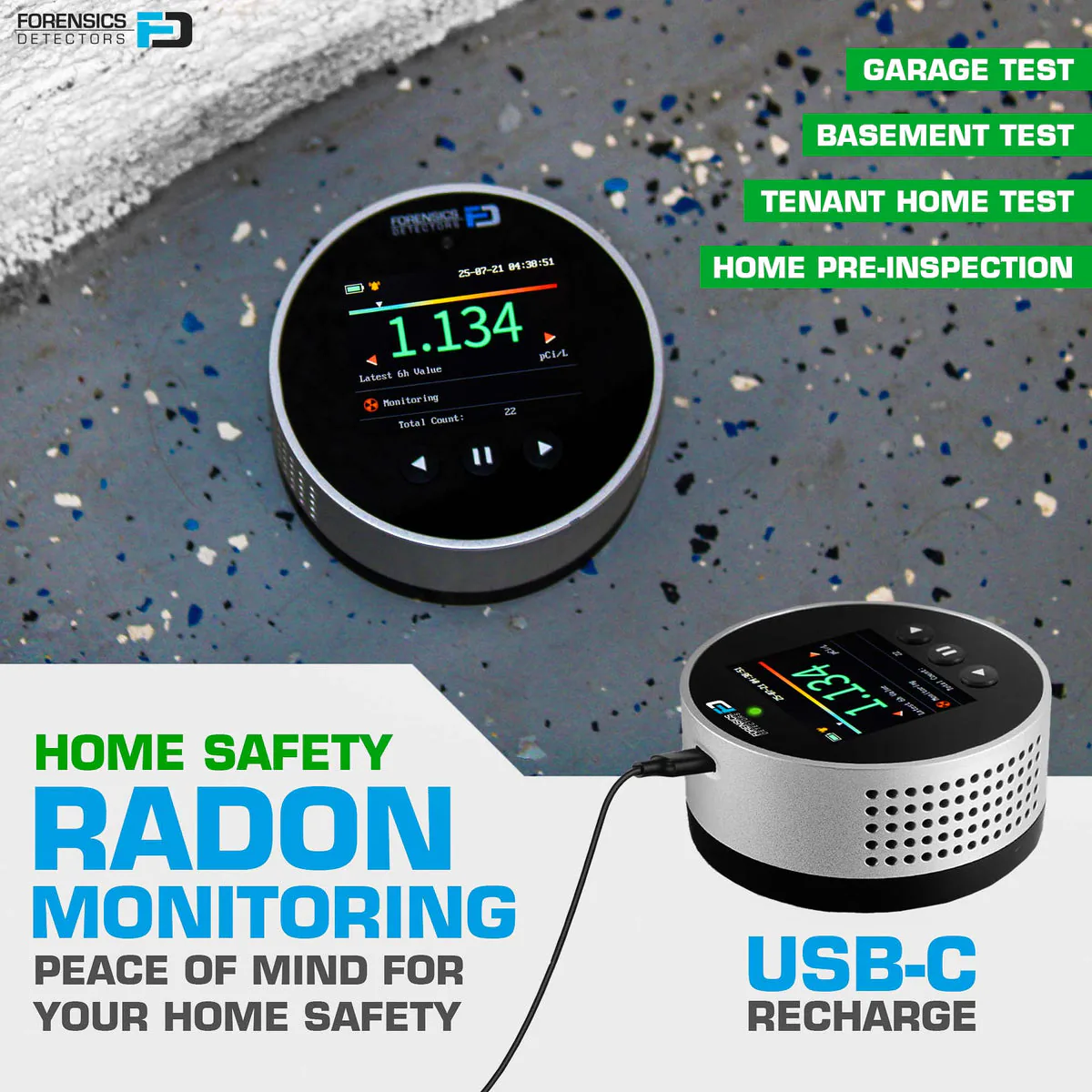
The FD-65-RADON is a pocket-sized radon detector from Forensics Detectors, a California maker of gas detectors: a semiconductor sensor that counts alpha decay by natural diffusion, a 2-inch color screen, an alarm, and a built-in battery charged over USB-C. It was not included in C-NRPP's 2024/25 evaluation.
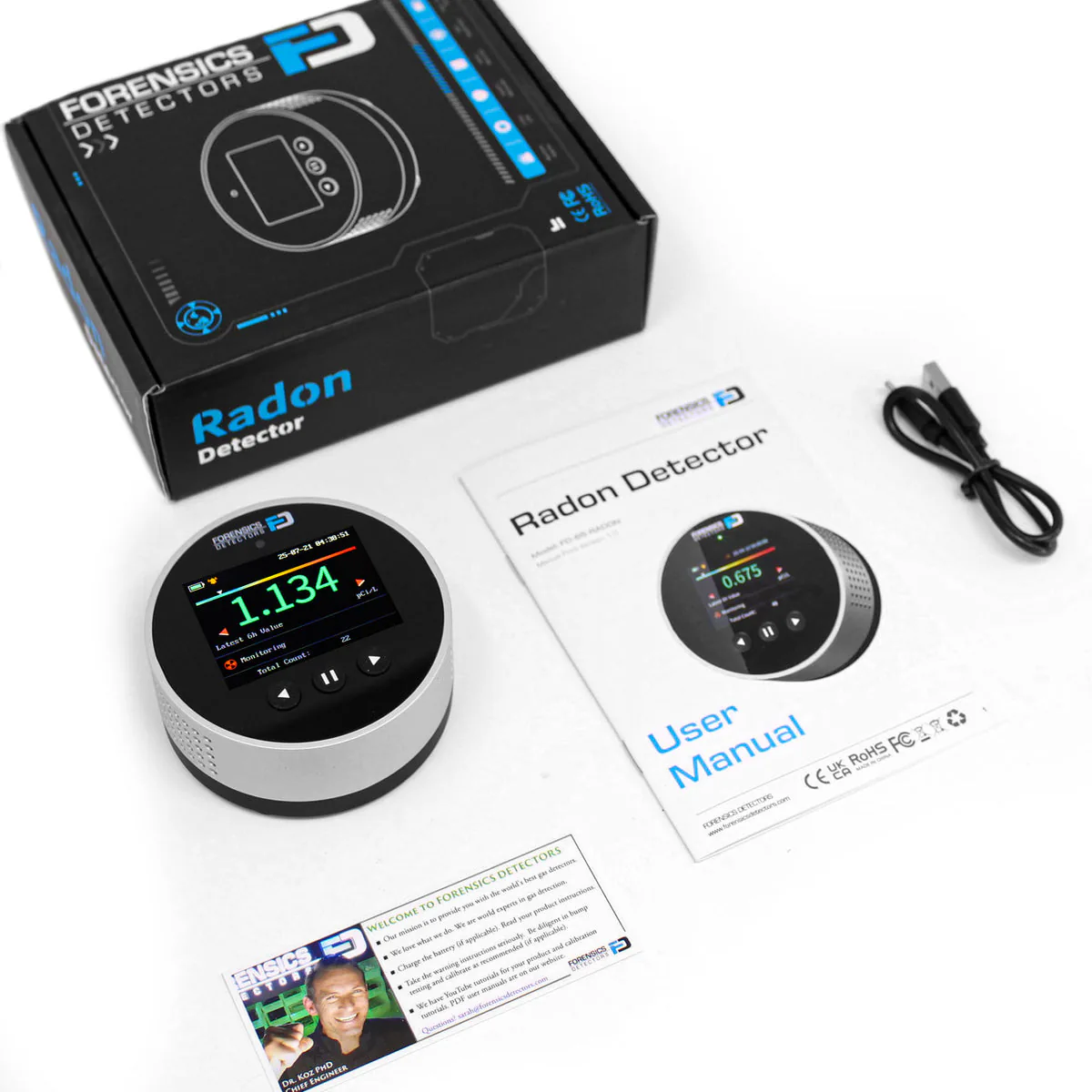
Forensics Detectors lists the radon detector, a user manual and a USB Type-C recharge cable in the box; the manual asks for a charger rated above 1.0 A for fast charging. It measures 3.2 by 1.6 inches and weighs 4.3 oz. The warranty is a one-year limited warranty, and the manual says the unit cannot be repaired if it has been tampered with.
In the box and running costsHow it works
The sensor, the sampling and the readings, then who has checked it
In our words, from the maker's documents
Forensics Detectors describes the sensor as an alpha-decay event detector with a radon semiconductor sensor. Air reaches it by natural diffusion, with no pump, and the sensor registers the alpha particles given off as radon decays. The screen keeps a running total count, and a green light on the front flashes once each time an alpha decay is detected, so you can see it working.
The first reading takes 6 hours after the detector is switched on. The manual explains why: alpha decays are infrequent at ordinary indoor levels, radon has to diffuse into the chamber and reach equilibrium, and the detector integrates the signal over time to smooth out random swings. After that, the main reading updates every hour and shows the average of the latest 6 hours.
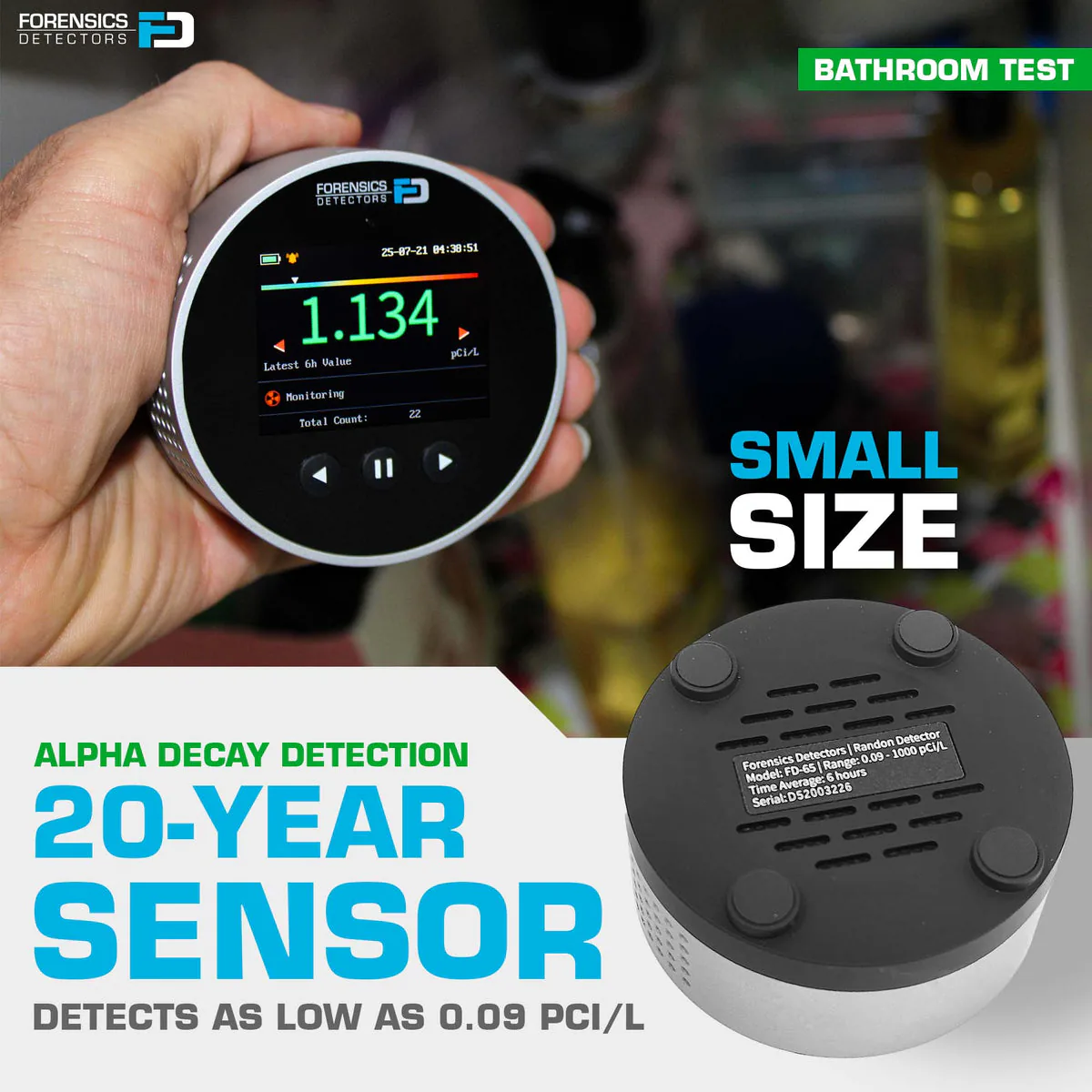
Beside the 6-hour value, the detector cycles through 12, 24, 48 and 96-hour averages and an accumulated average and peak since it was switched on, and it logs the 6-hour average with the accumulated average and peak, each stamped with the time and date. Forensics Detectors lists a reaction range of 0.09 to 1000 pCi/L, or 3.3 to 37,000 Bq/m³, and an accuracy of ±15%.
Readings show in pCi/L by default, and the settings menu switches the unit to Bq/m³. The same menu sets the low and high alarm points, a screen sleep mode to save power, the language and the clock. When the reading passes the limit, the value flashes with an alarm icon and a 75 dB ticking sounds for 20 seconds every hour.
Power is a built-in 3.7 V, 2000 mAh lithium-ion battery, which Forensics Detectors rates for 45 days of operation and charges over USB Type-C in about 4 hours. An animated battery icon shows while it charges, and "Charging Complete" appears when it is done; the readings and the log are read on the device's own screen.
Forensics Detectors's own statements, attributed
These are Forensics Detectors's own statements, attributed to it. They are not our findings, and we have not tested this product ourselves.
C-NRPP 2024/25, recalls and studies
The Canadian National Radon Proficiency Program's 2024/25 comparison of consumer monitors did not include Forensics Detectors FD-65-RADON. That is a fact about which devices took part, not a finding about this one: no result from that program exists for it either way.
C-NRPP is the Canadian National Radon Proficiency Program. Its 2024/25 results were published in May 2025.
Forensics Detectors FD-65-RADON
Check price on Amazon (opens in a new tab)Specifications
Every figure as the maker states it
Forensics Detectors lists the radon detector, a user manual and a USB Type-C recharge cable in the box; the manual asks for a charger rated above 1.0 A for fast charging. It measures 3.2 by 1.6 inches and weighs 4.3 oz. The warranty is a one-year limited warranty, and the manual says the unit cannot be repaired if it has been tampered with.
There is no lab fee or battery to buy: the lithium-ion battery is recharged over USB-C, about every 45 days by Forensics Detectors' rating, from a 5 V charger rated above 1.0 A. Forensics Detectors states a sensor life of more than 20 years.
Fit and setup
The fit, then setup and placement as the guidance asks
Good fit if, and look elsewhere if
Good fit if
Look elsewhere if
4 steps
How C-NRPP says to use any consumer monitor
For where any radon test or monitor should sit in a home, see where to place a radon test.
Compare
The same three rows for each, and the one difference that matters
This page
Forensics Detectors FD-65-RADON
This page: The FD-65-RADON is a pocket-sized radon detector from Forensics Detectors, a California maker of gas detectors: a semiconductor sensor that counts alpha decay by natural diffusion, a 2-inch color screen, an alarm, and a built-in battery charged over USB-C.
Airthereal
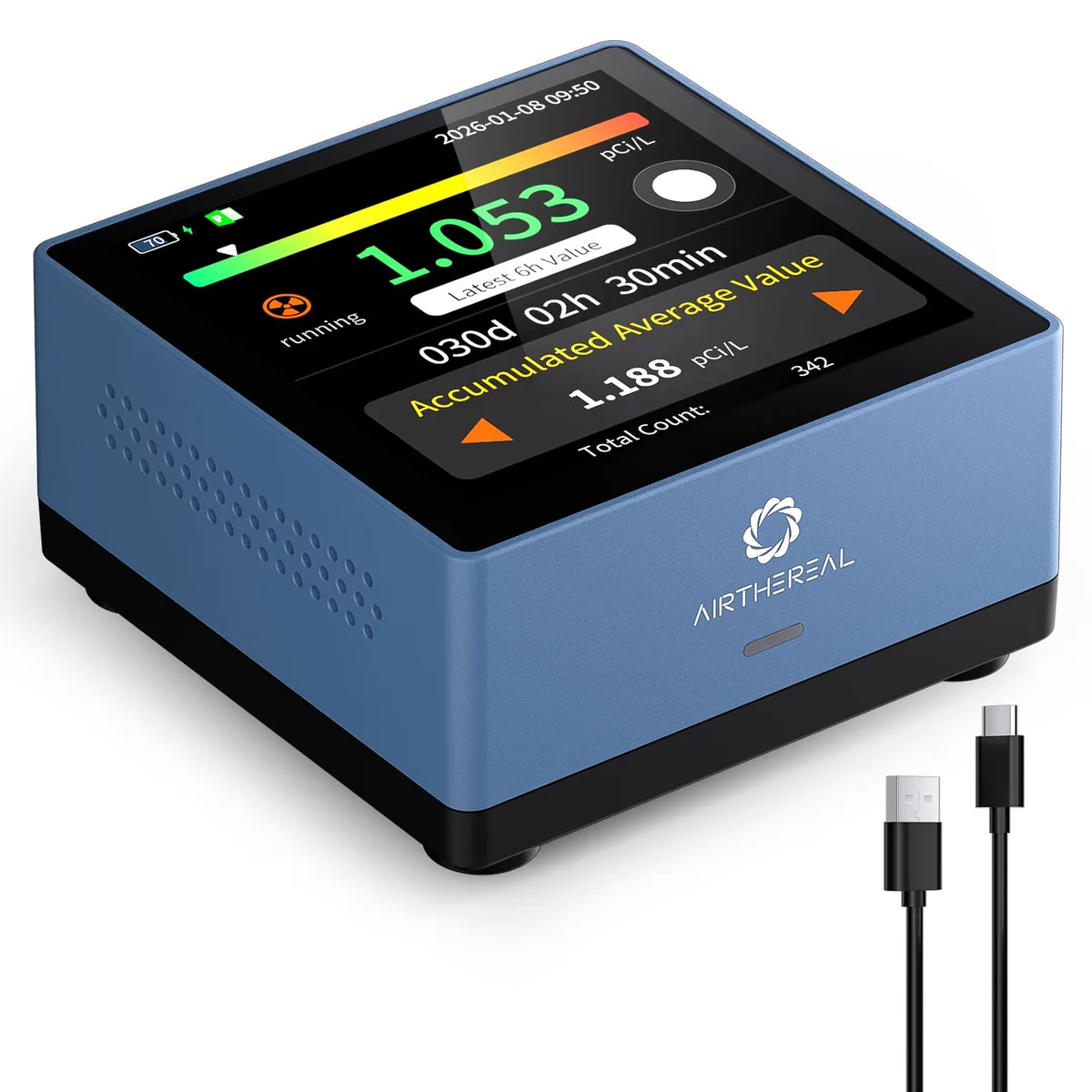
The difference: Airthereal's touchscreen monitor lists the same 0.09 to 1000 pCi/L range, ±15% and a 2000mAh USB-C battery, with a 3.4-inch colour touchscreen and PDF report export.
Airthereal
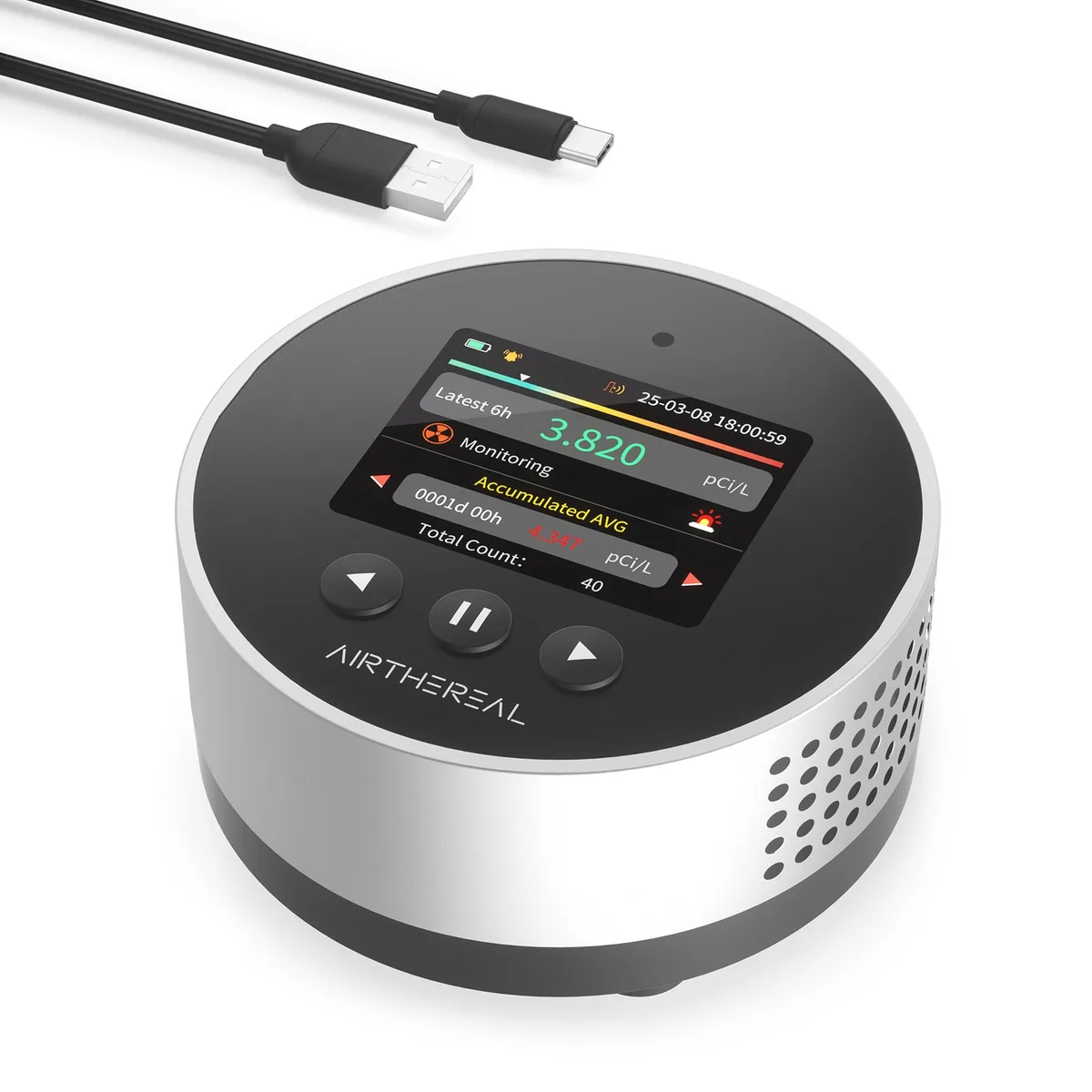
The difference: Airthereal's manual for the RM-65 lists the same 0.09 to 1000 pCi/L range, ±15% accuracy, 2000 mAh battery and 45 days with the screen off, in a round case 80 mm across and 40 mm high, with charging in about 3.5 hours and up to 504 days of history in a record.
The difference: Another detector with a semiconductor sensor and a 0.09 to 1,000 pCi/L range, on three replaceable AAA batteries, with its first data after 12 hours.
X-Sense
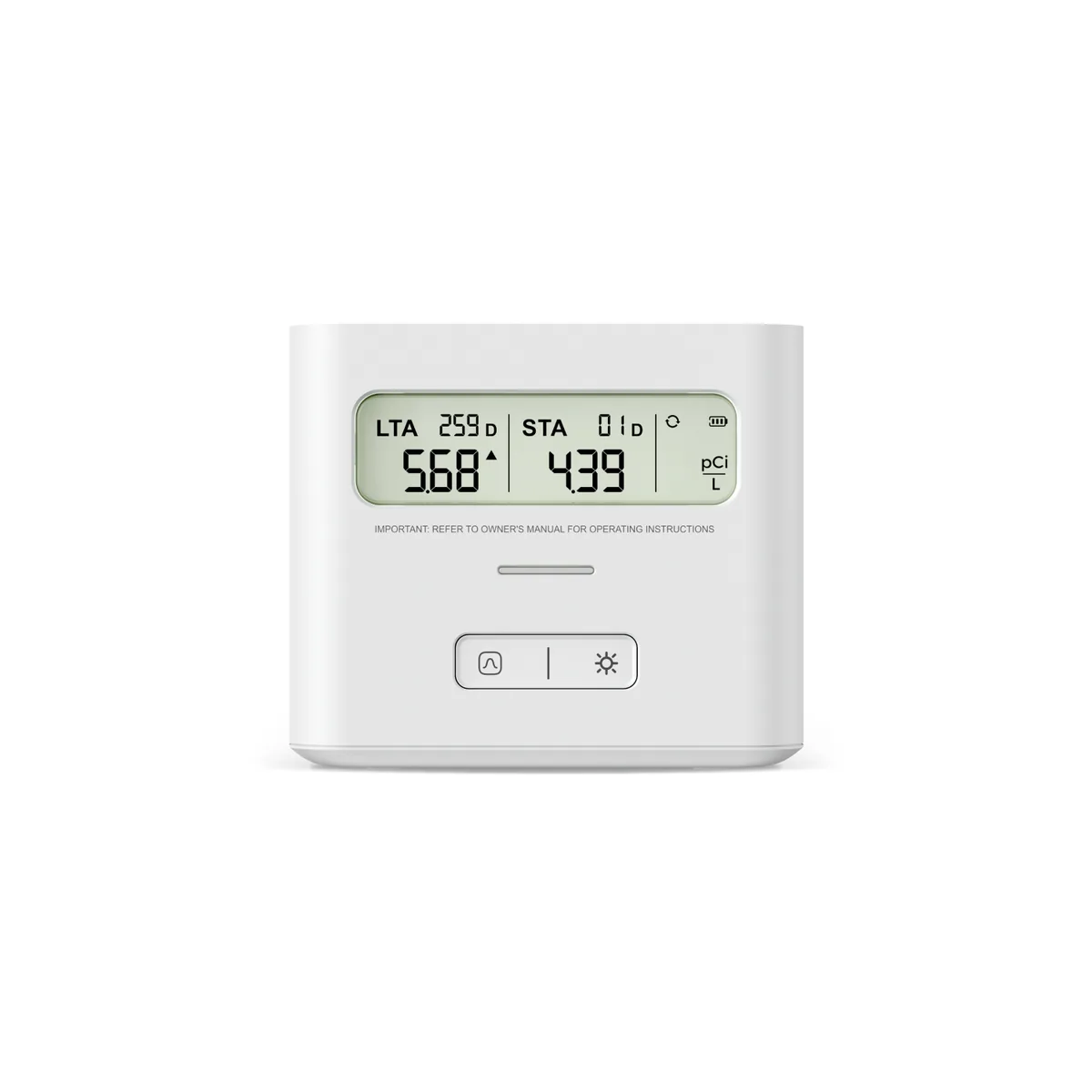
The difference: A battery detector that counts radon by continuous alpha spectrometry in a passive diffusion chamber, on three AA batteries, with short-term and long-term averages.
Compared with similar products: 1 of 5
MonitorAEGTEST
Method: Semiconductor sensor
First reading: Within 6 hours
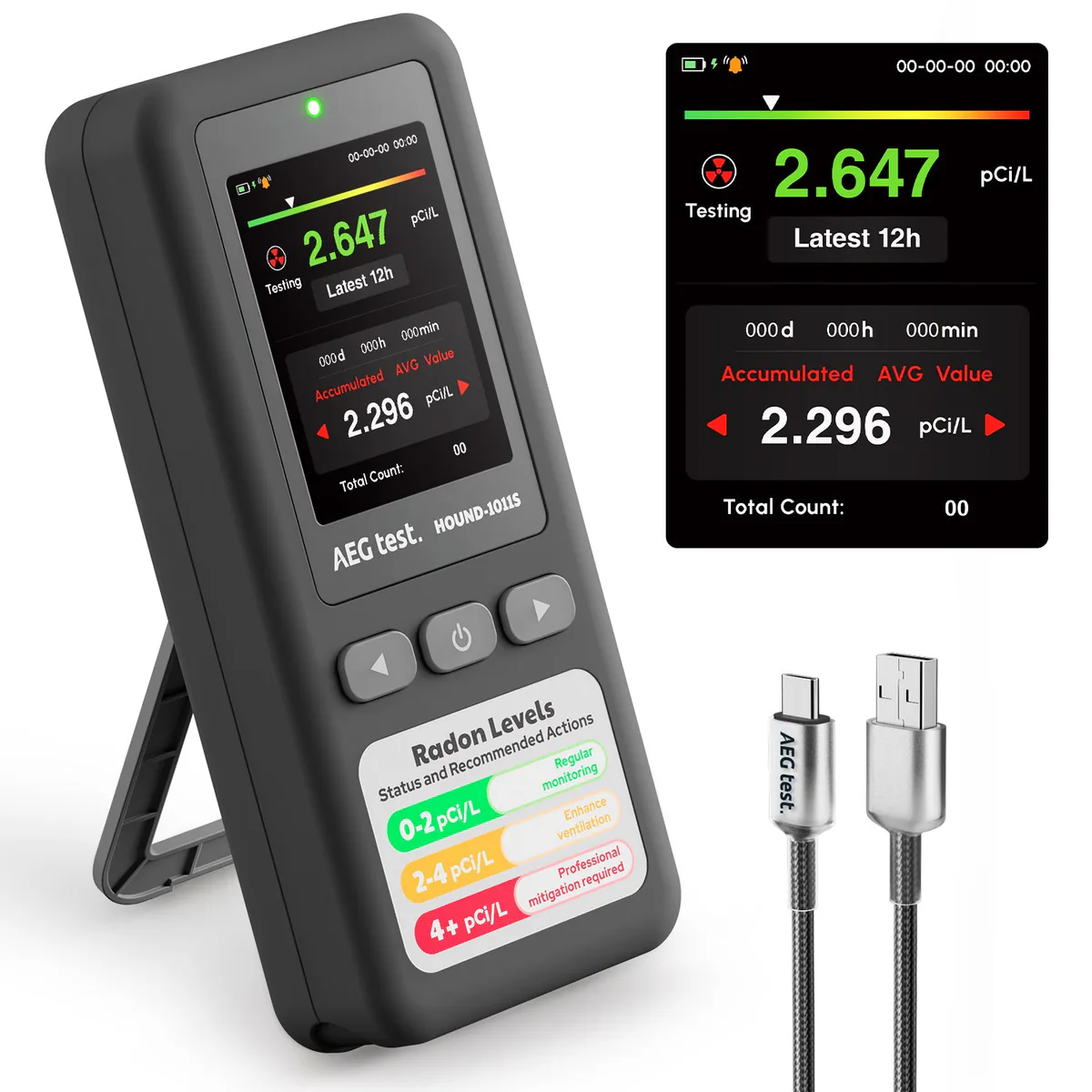
MonitorAEGTEST
Method: Semiconductor sensor
First reading: Within 12 hours
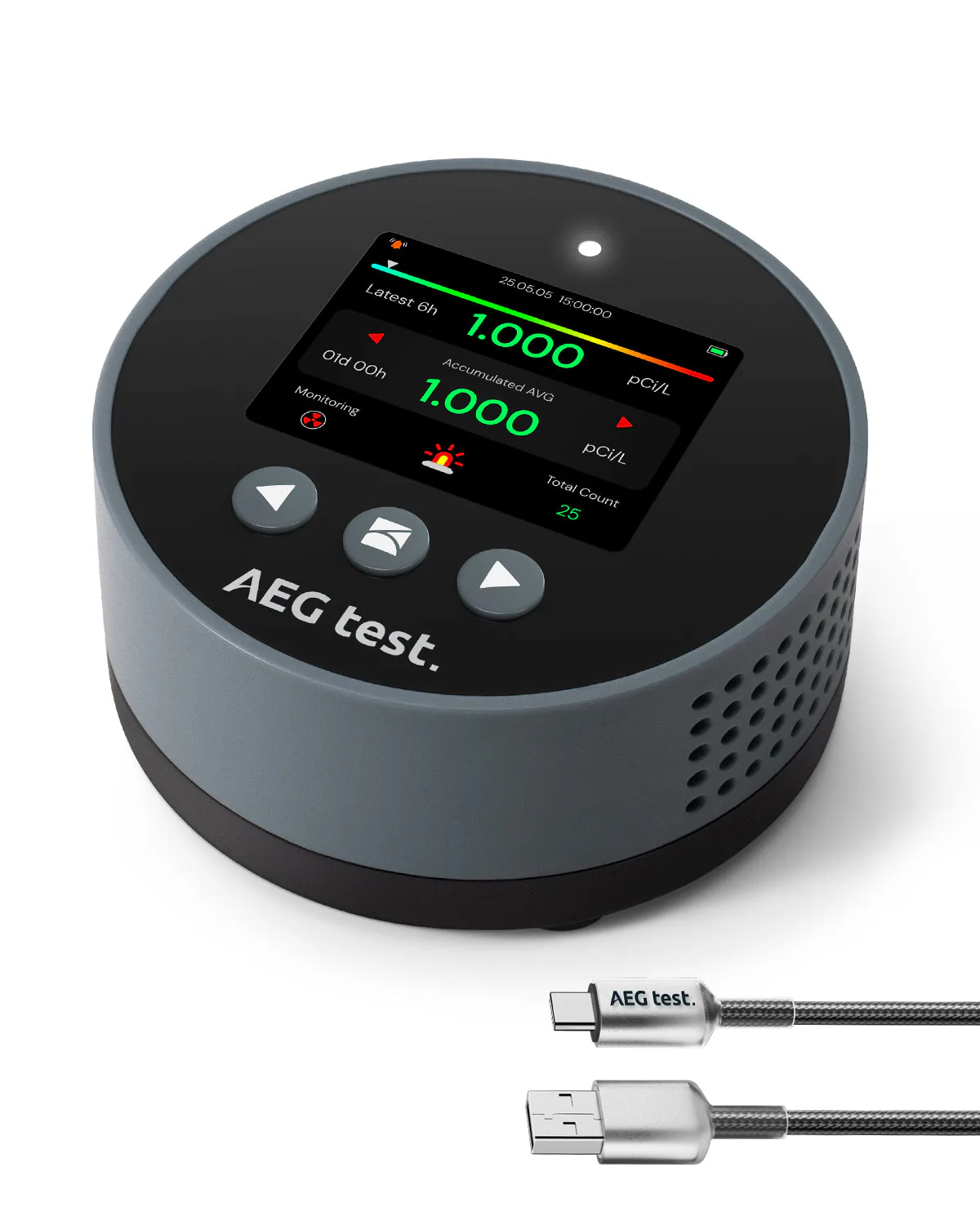
MonitorAEGTEST
Method: Semiconductor sensor
First reading: Within 6 hours
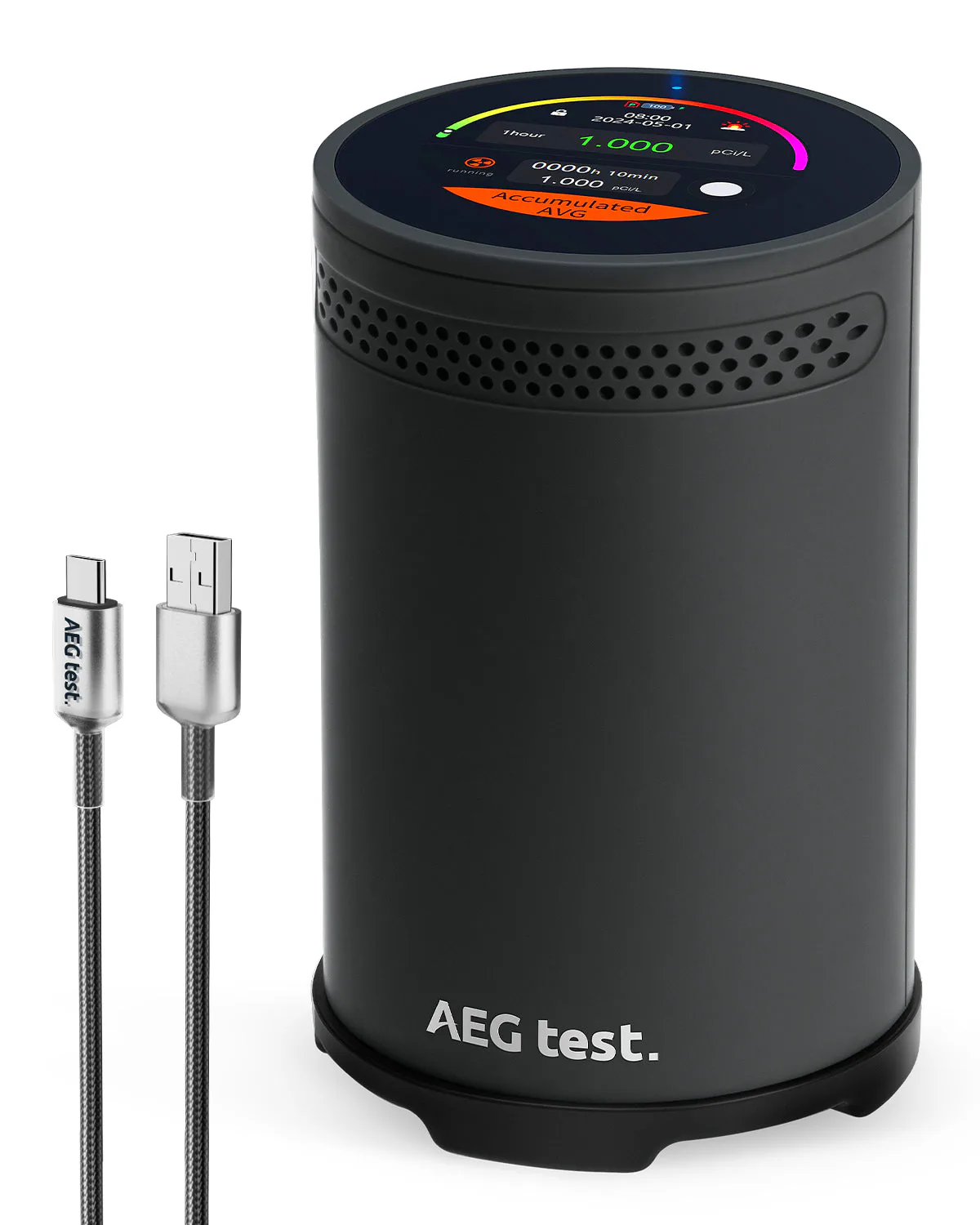
MonitorAEGTEST
First reading: Within 1 hour
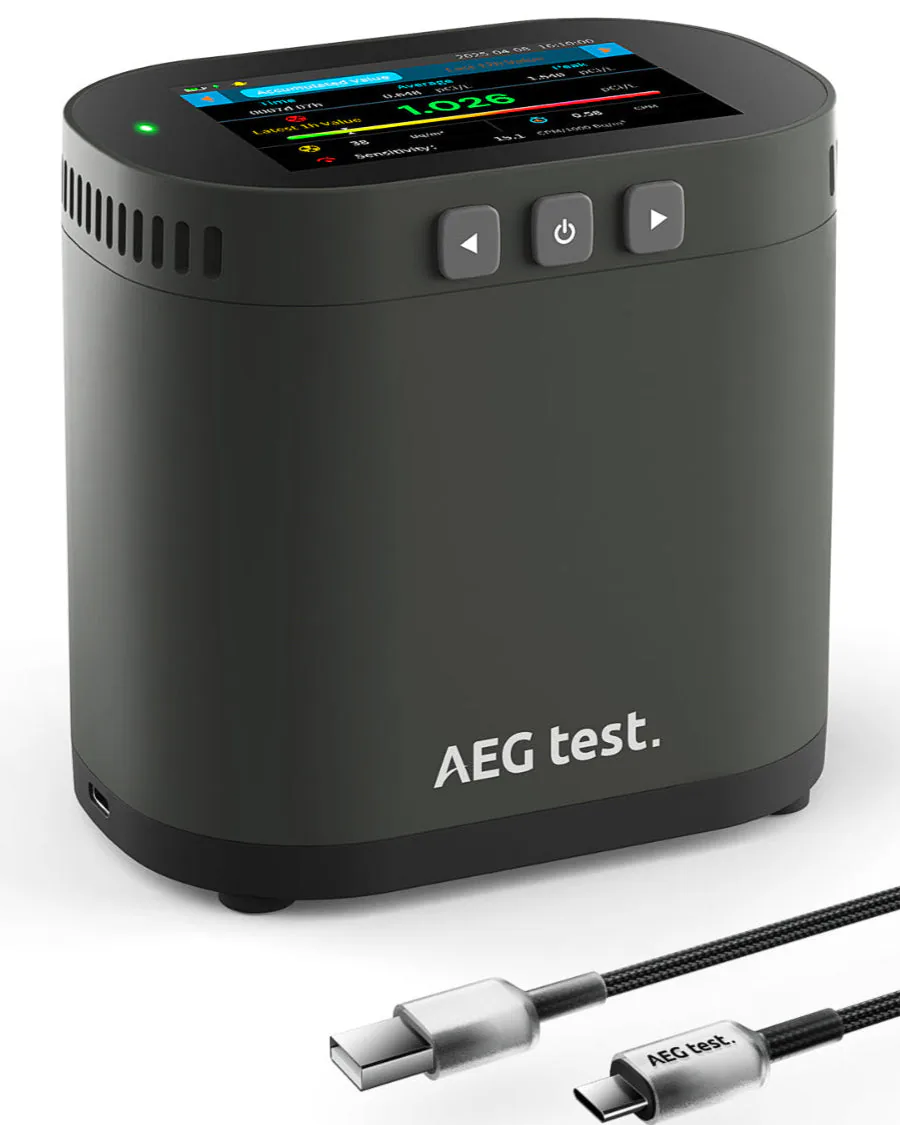
MonitorAEGTEST
Method: Ion chamber
First reading: Within 10 minutes
Monitor
Method: Semiconductor sensor
Monitor
Method: Semiconductor sensor
First reading: Within 6 hours
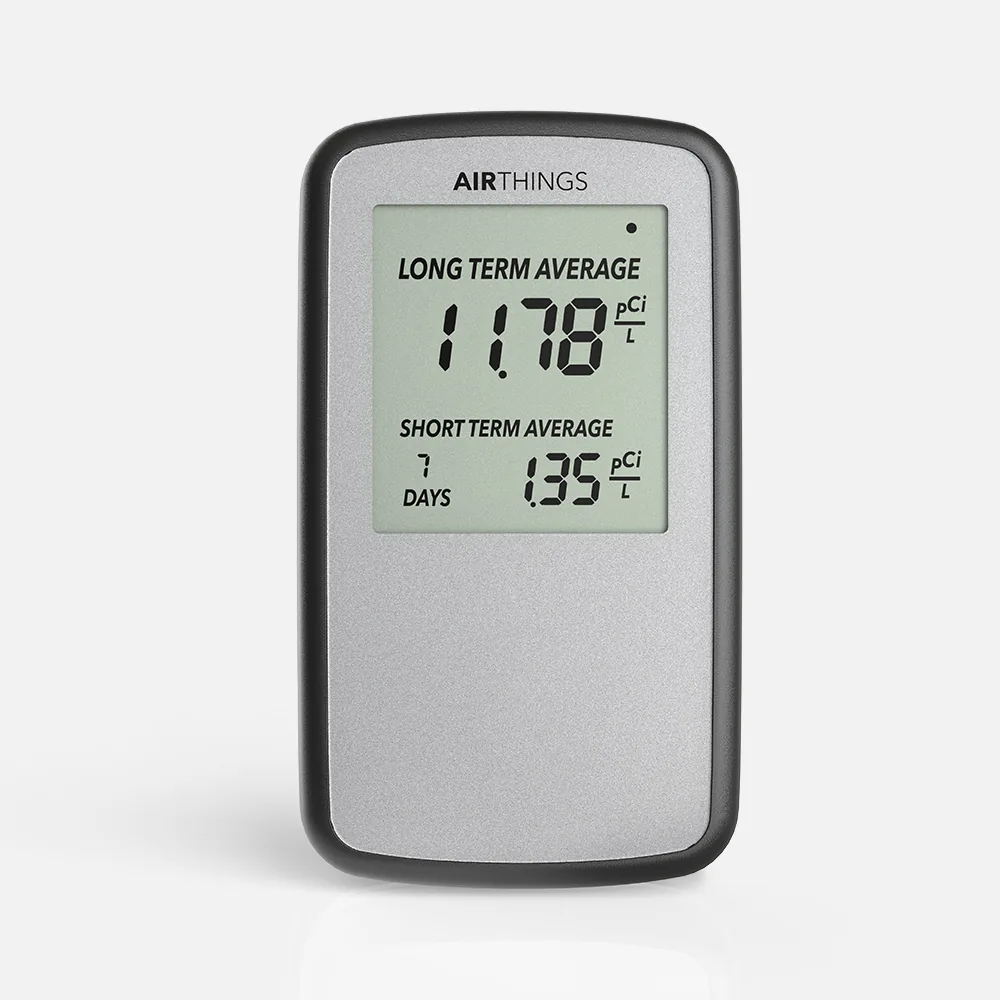
Monitor
Method: Alpha spectrometry
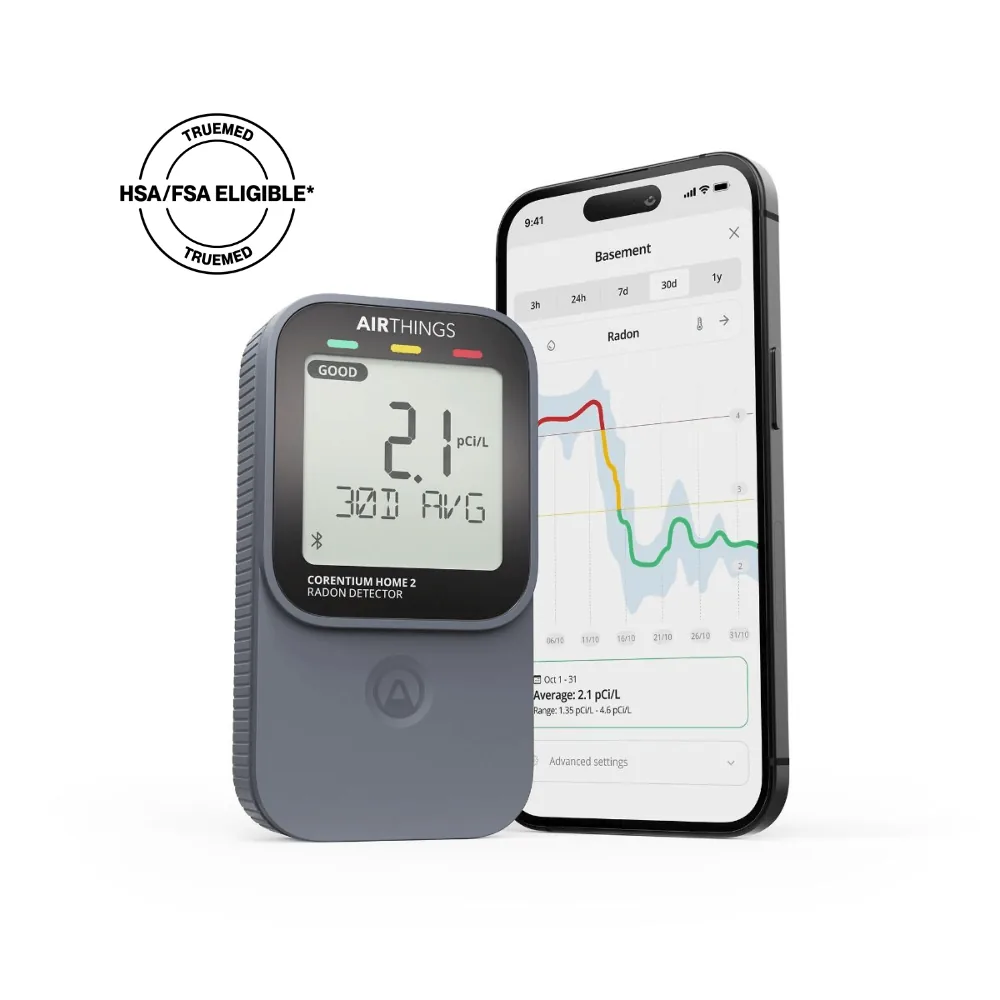
Monitor
Method: Alpha spectrometry
Readings: Every 60 minutes
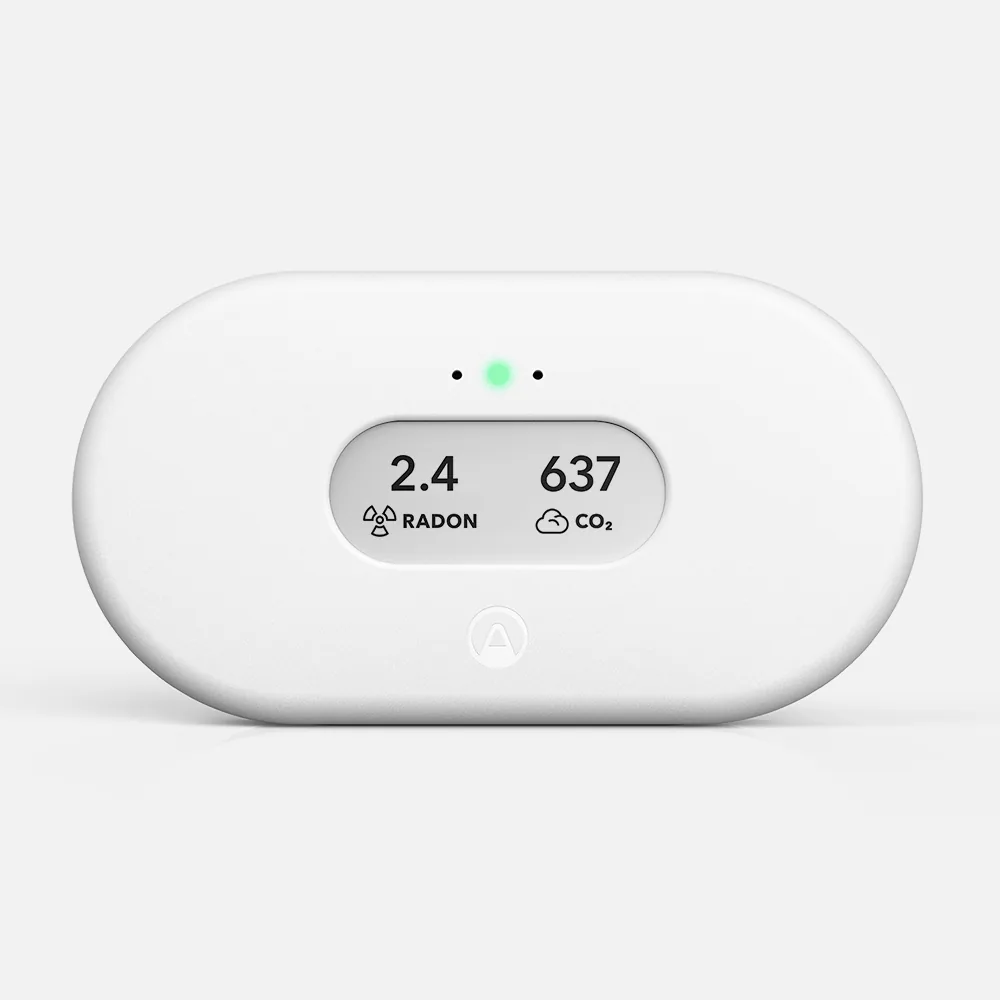
Monitor
Method: Alpha spectrometry
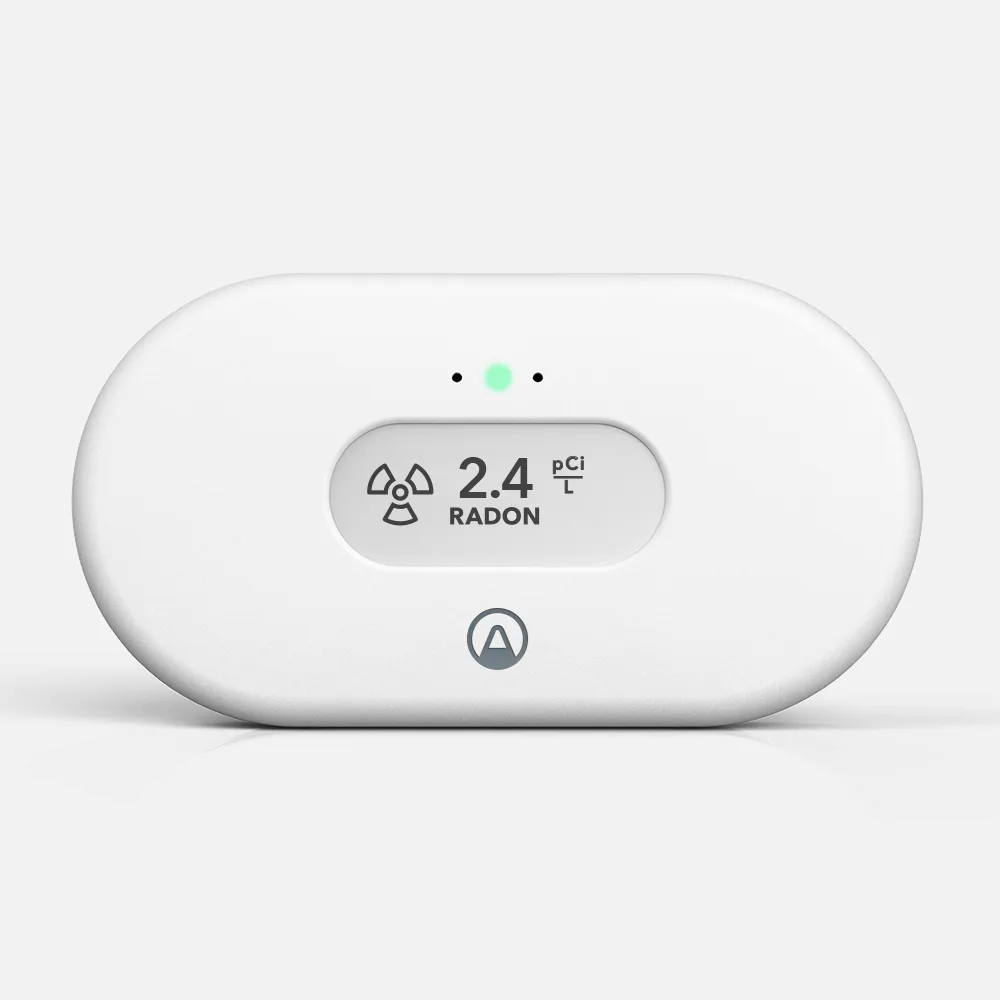
Monitor
Method: Alpha spectrometry
Readings: Every 60 minutes
Monitor
Method: Alpha spectrometry
Monitor
Method: Alpha spectrometry
MonitorAranet
Method: Ion chamber
First reading: Within 10 minutes
MonitorAranet
Method: Ion chamber
First reading: Within 10 minutes
Monitor
Method: Ion chamber
First reading: Within 10 minutes
Monitor
Method: Ion chamber
First reading: Within 10 minutes
Monitor
Method: Ion chamber
First reading: Within 15 minutes
Monitor
Method: Ion chamber
First reading: Within 10 minutes
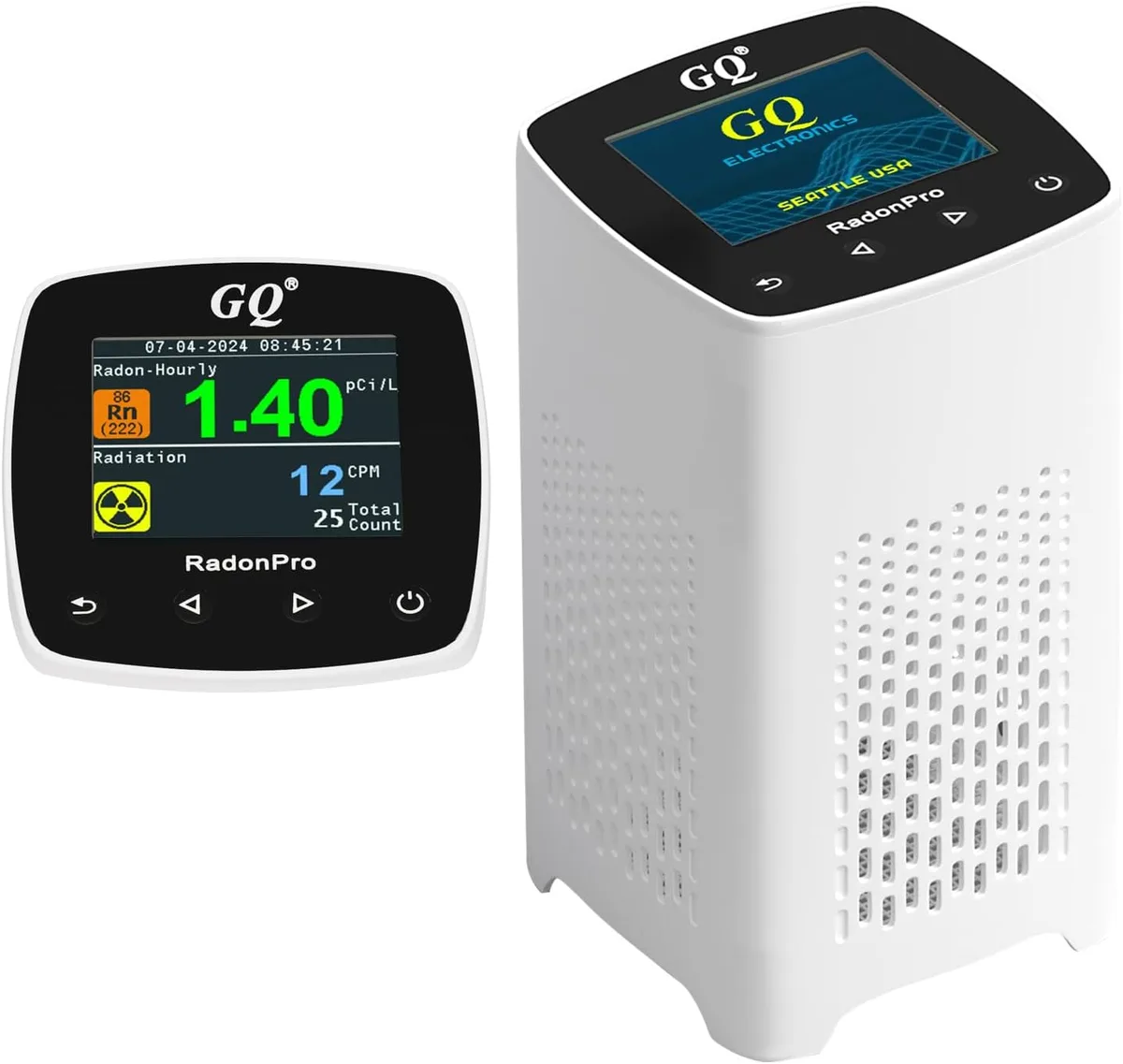
Monitor
First reading: Within 5 minutes
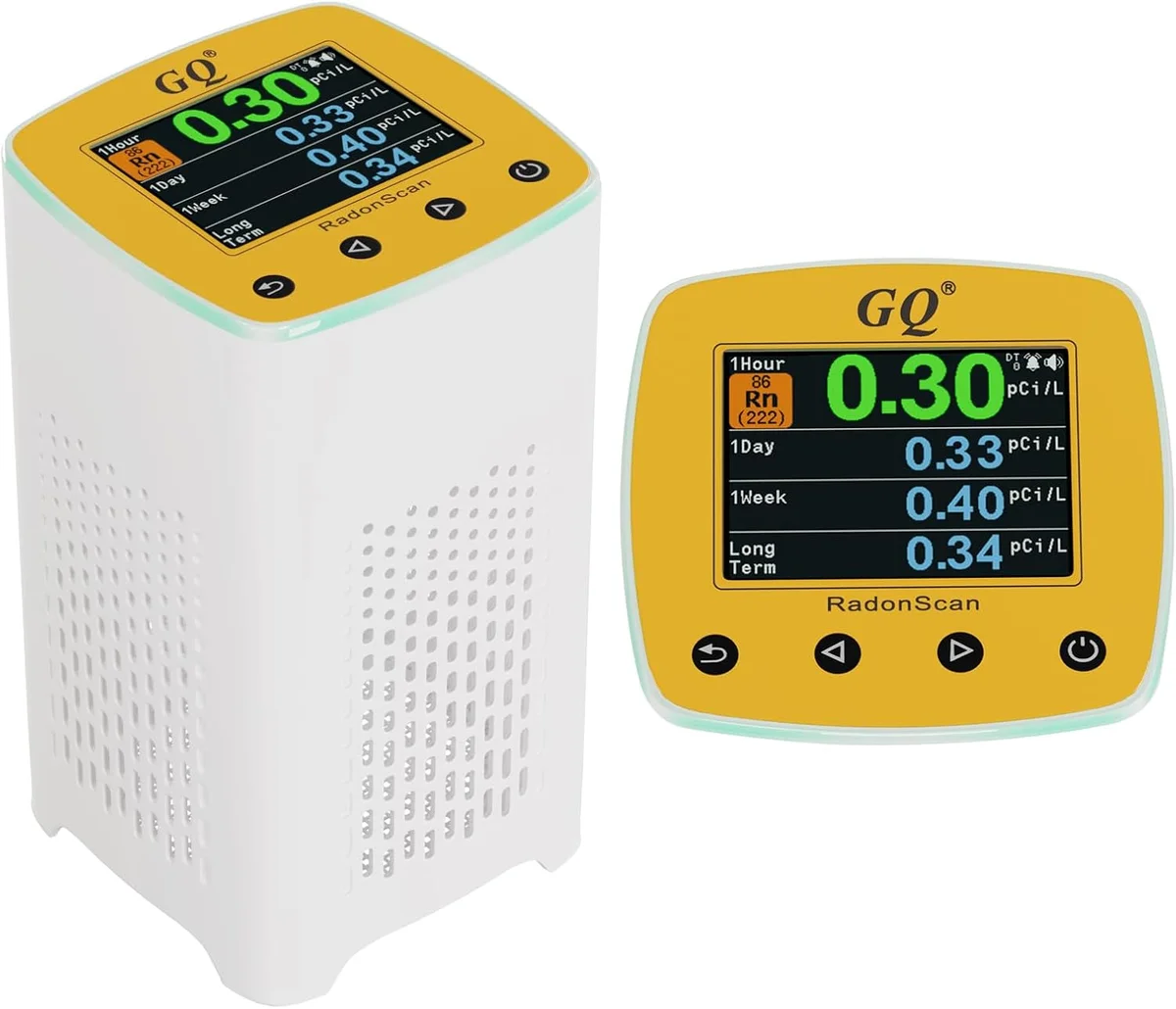
Monitor
First reading: Within 5 minutes
Monitor
First reading: Within 5 minutes
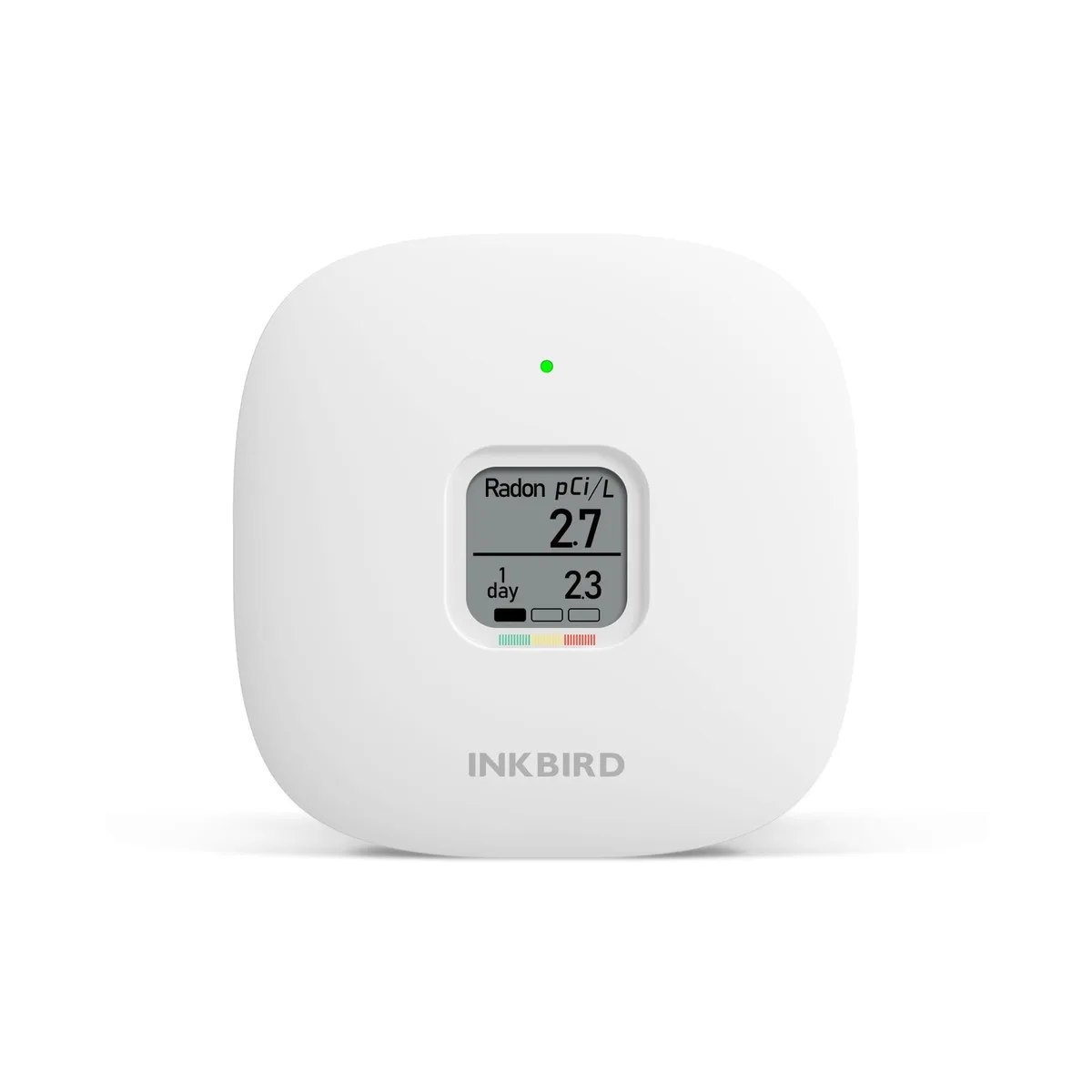
MonitorINKBIRD
First reading: Within 24 hours
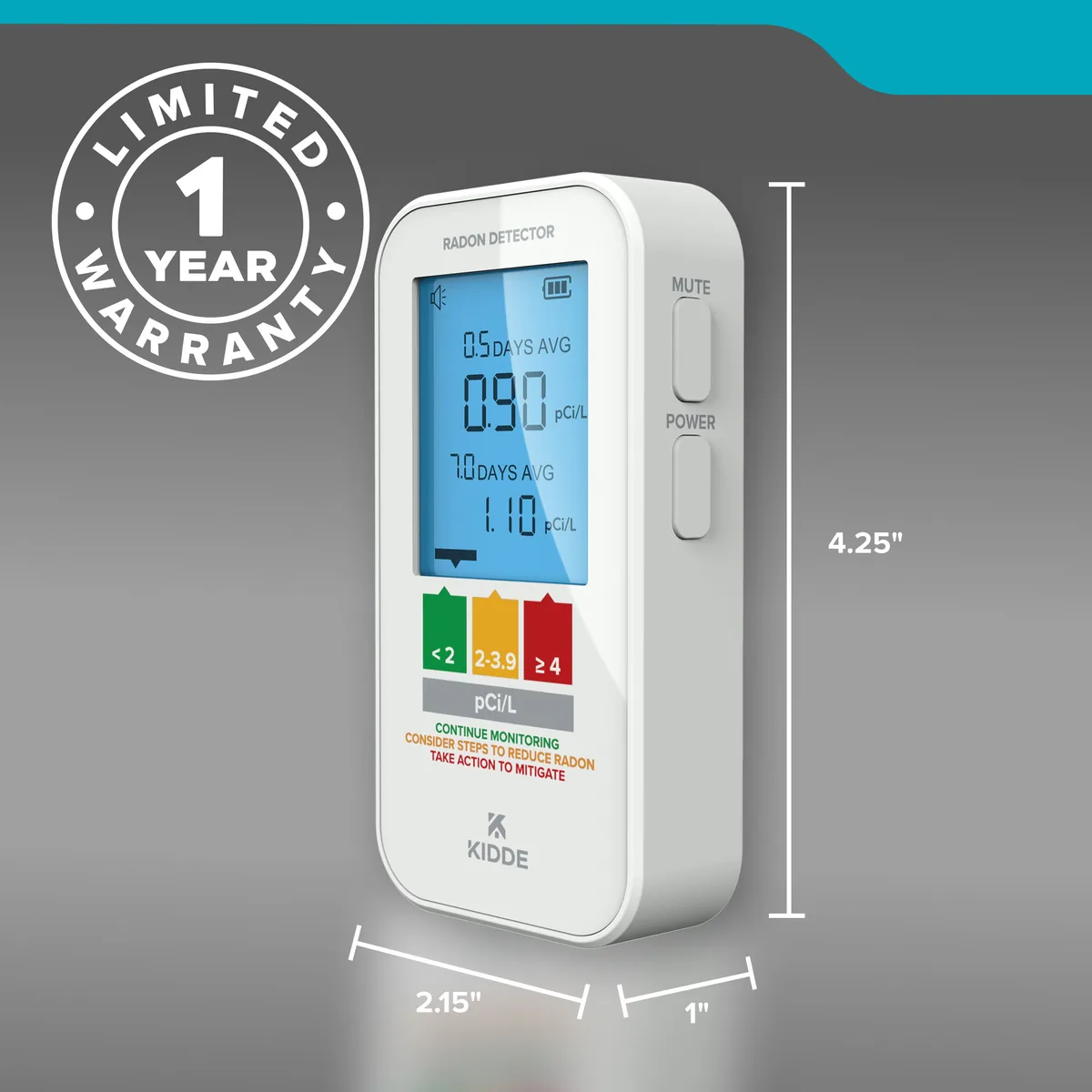
MonitorKidde
Method: Semiconductor sensor
First reading: Within 12 hours
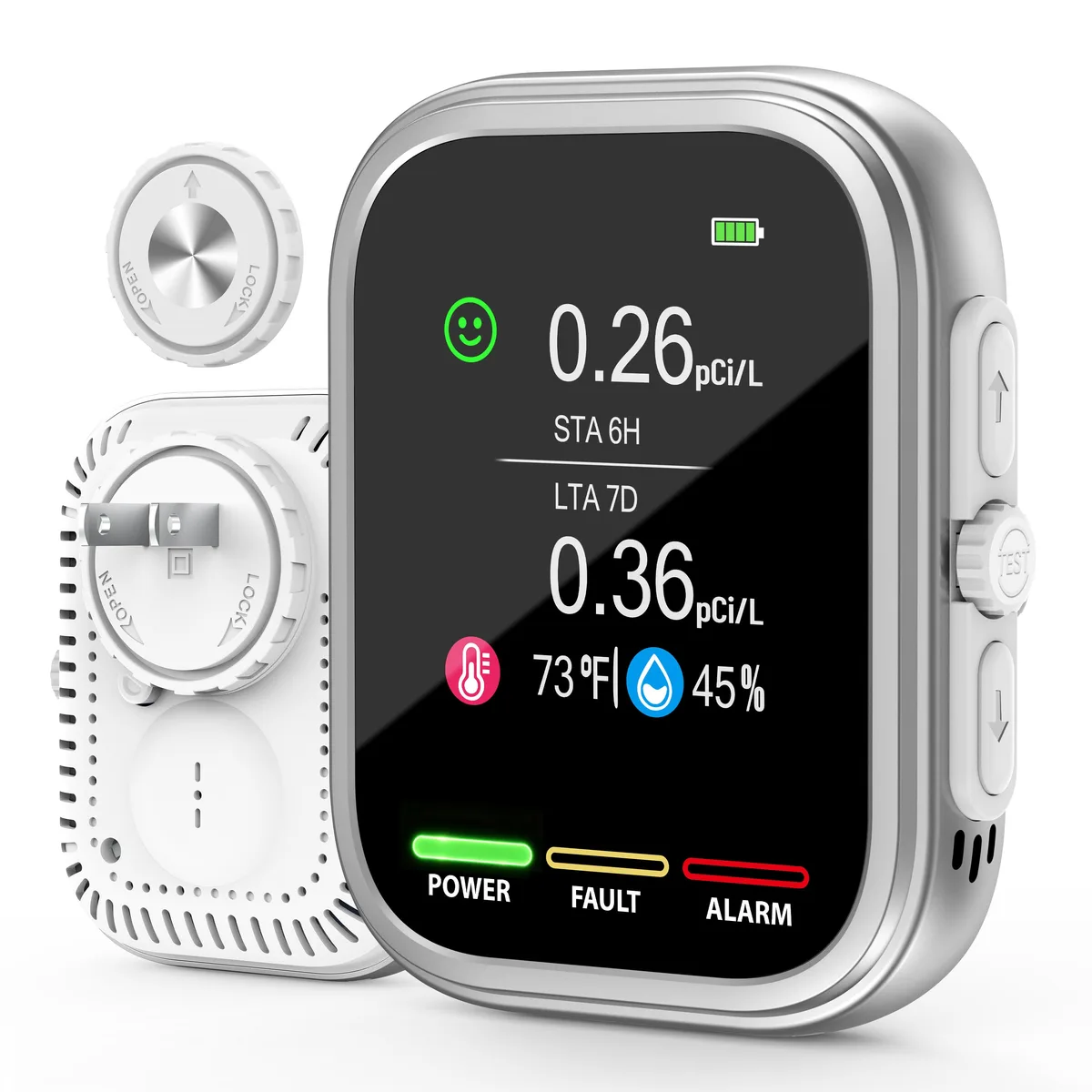
MonitorPYZYCKYH
Method: Semiconductor sensor
First reading: Within 6 hours
MonitorSafetySiren
First reading: Within 48 hours
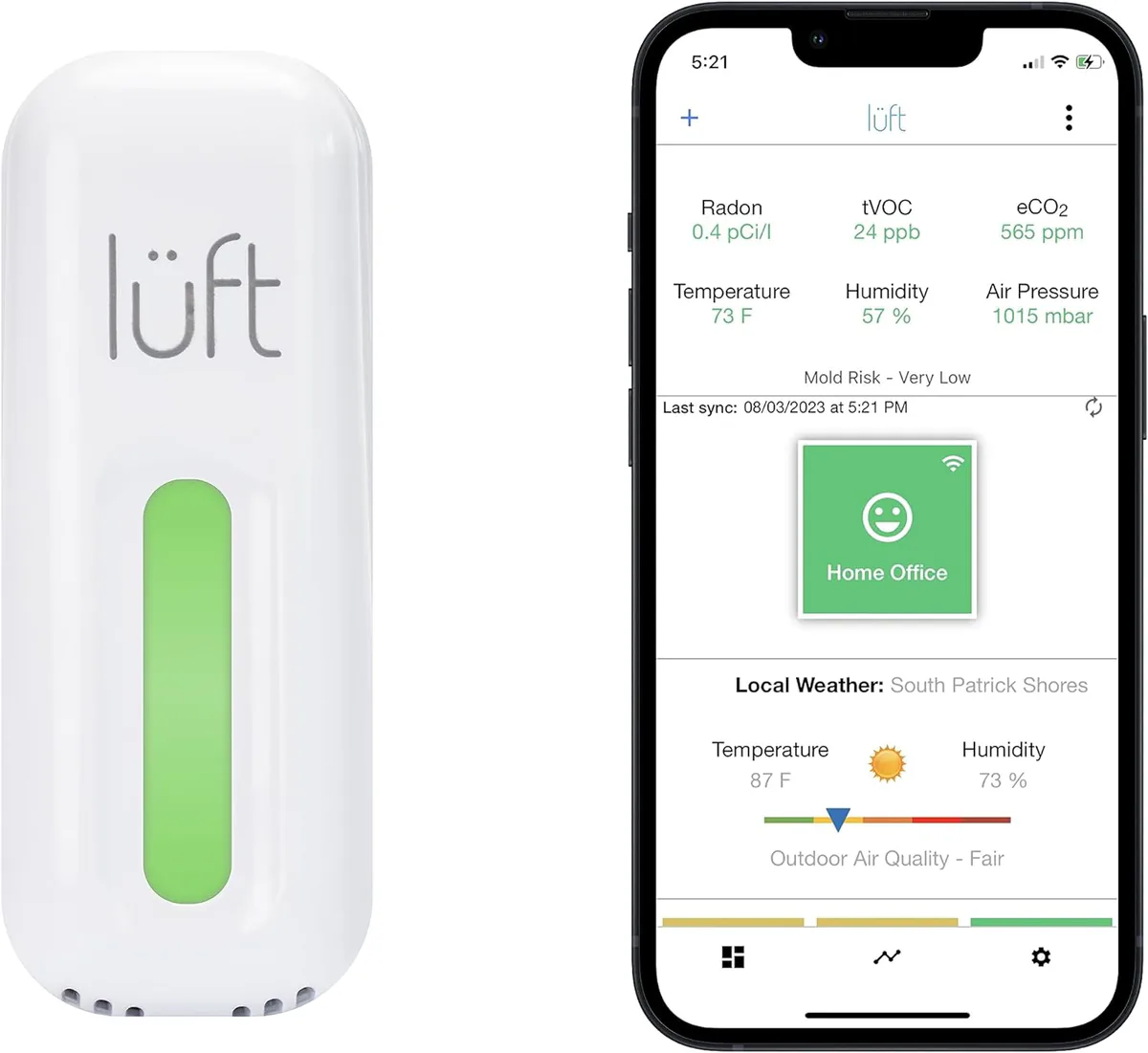
Monitor
First reading: Within 90 minutes
Monitor
Method: Alpha spectrometry
First reading: Within 24 hours
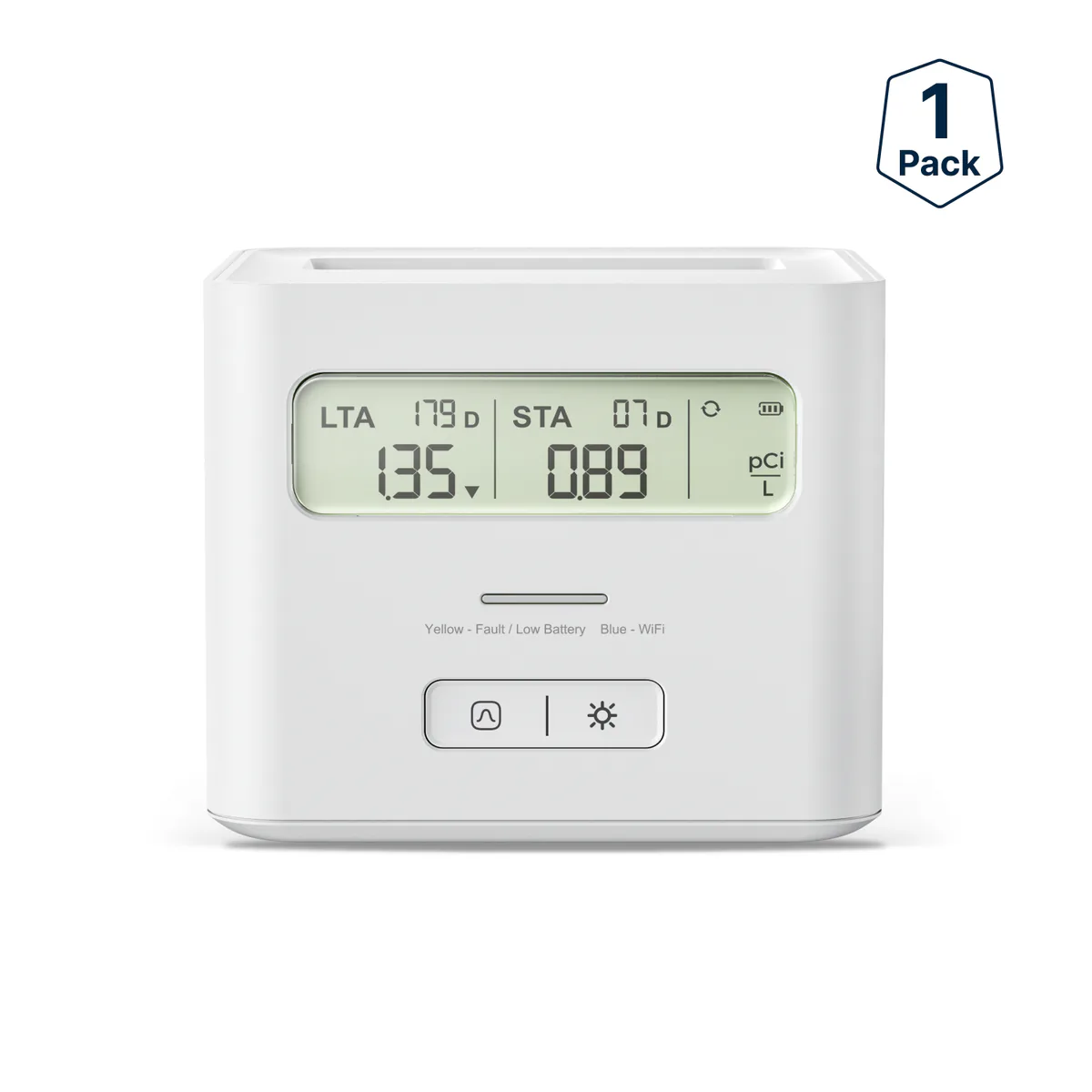
MonitorX-Sense
Method: Alpha spectrometry
First reading: Within 24 hours
MonitorX-Sense
Method: Alpha spectrometry
First reading: Within 24 hours
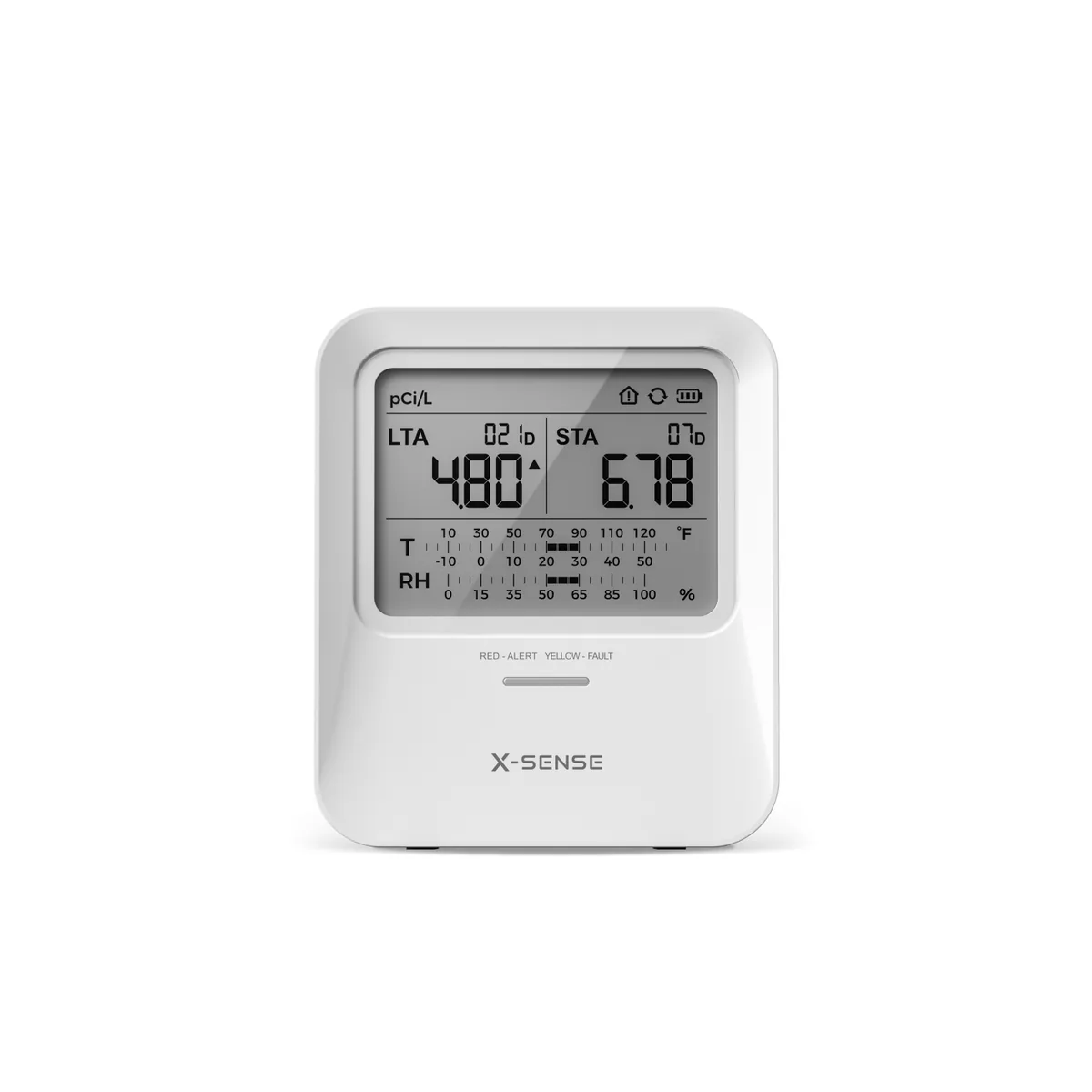
MonitorX-Sense
Method: Alpha spectrometry
First reading: Within 24 hours
More home radon monitors: 1 of 31
Questions
5 questions about the Forensics Detectors FD-65-RADON, answered
6 hours after it is switched on. After that the reading updates every hour with the latest 6-hour average, and the 12, 24, 48 and 96-hour and accumulated averages build up behind it.
Yes. It shows pCi/L by default, and the Unit setting in the menu changes it to Bq/m³.
Forensics Detectors rates the built-in 2000 mAh lithium-ion battery for 45 days of operation and gives a charging time of about 4 hours over USB Type-C. The Eco setting puts the screen to sleep to save power.
It was not included in C-NRPP's 2024/25 consumer monitor evaluation, so there is no C-NRPP result for it either way.
Once the reading passes the alarm point you set, the value flashes with an alarm icon, the front light flashes red and a 75 dB ticking sounds for 20 seconds every hour. The manual's own advice for a high level is to contact a certified radon mitigation specialist.
Updated October 6, 2026